|
|||||
| Leg Design | |||||
|
The leg linkage is the key to Ziggy's mobility, and it took quite a while to perfect.
The original linkage prototype was fashioned with Lego Technics, and from there
I built several aluminium prototypes and used a java
applet to computer-optimize the geometry.
|
|||||
|
|||||
Design Pointers |
|||||
|
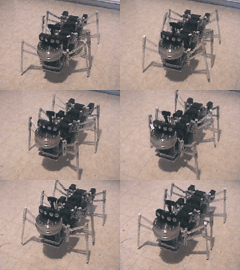
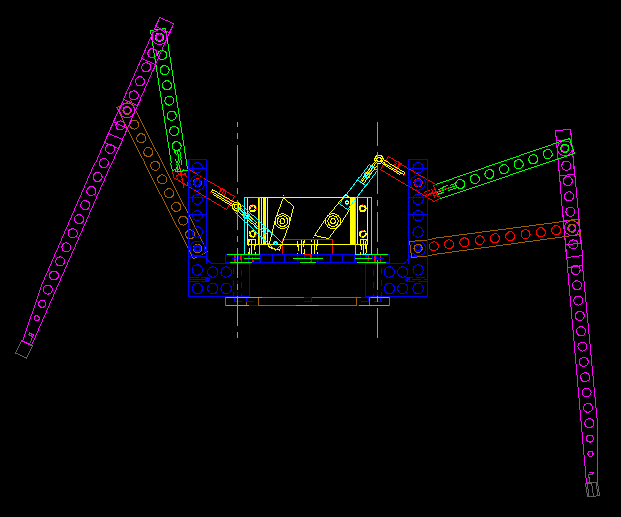
There were two primary design considerations I was after for Ziggy; I wanted him to look like an insect, and I wanted to mount all the servos to the body and not the legs. Most other hexapods that I have seen tend to have one servo mounted to the body, moving the leg back and forth, and the second servo mounted to the leg, moving the leg up and down. I prefer to keep the legs very lightweight and elegant. The first goal was a simple task of creating a box linkage that allowed the leg to look how I wanted (see linkage design). I achieved the second goal using a universal joint to couple the vertical servo to the leg (thanks to Eric who was giving me a massage when I came up with this idea!). The basic idea is that if the leg is free to pivot about the vertical axis at the point of coupling, I don't need to mount servos to the legs. The universal joint is simply constructed out of two cotter pins, yellow in the above picture (I bent the original joint out of paper clips, then realized that what I had come up with was a cotter pin!). When the leg is either all the way down or all the way up, the universal joint has be vertically over the hip hinge axis, so the leg can pivot forward and back. This was accomplished by adding a kink in the leg section coupled to the servo (red & green above) - my original design of an angular split lap joint turned out to be very fragile and bent easily, so I had to redesign the joint using an angled tongue-and-groove joint which can support much more weight. All hinges consist of an 8-32 screw running through a thin wall brass tube, preventing any aluminium on aluminium / steel contact. This is important as I don't want the hard to make leg pieces wearing; I would rather have the brass tubes wear, as they are easy to replace. The outer edge of the hinge has a nylon washer to keep the aluminum apart. The end result is a fairly simple and yet effective low-friction hinge that works really well. Please visit the linkage design page for more on optimization of the leg linkage. |